


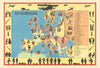


Maps do more than describe the world: they can also persuade, provoke, advertise and mobilise. This collection brings together propaganda and persuasive maps designed to shape public opinion, political belief, wartime morale or commercial ambition. It ranges from nineteenth-century satirical and social-reform cartography to First World War visions of Pan-German expansion, Ronald Lampitt’s anti-Nazi maps, Allied psychological-warfare newssheets and Cold War representations of Communist power. Richard Edes Harrison’s dramatic Fortune maps recast the globe around air power, invasion routes, strategic resources and oil, while MacDonald Gill’s Empire Marketing Board maps and corporate cartography for Shell and ITT promote imperial trade and multinational reach. Temperance, poverty and social-campaign maps reveal persuasion at home. Together, these works show how projection, colour, symbolism, selective evidence and striking graphic design transformed the authority of the map into a powerful instrument of propaganda, advocacy, satire and promotion.
EU orders up to €150 are sent VAT- and duty-paid — no additional taxes on arrival
Authenticity Guaranteed - We only sell original antique & vintage items
Can we help? Call us on +44-208-960-3476 • FAQs
All our products are exempt from US tariffs — no additional duties or taxes payable on arrival.


- Shop by Country
- Shop by Cartographer
- Shop Maps by Type
- Shop Prints by Subject