
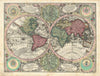

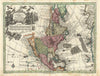

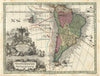

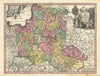

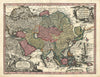

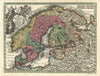

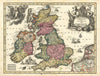

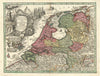

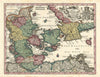

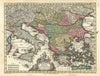

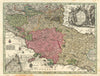

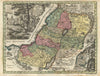

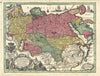

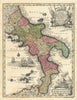

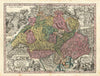

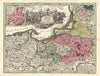

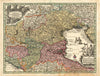

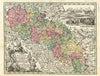

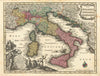

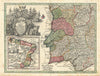

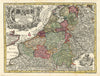

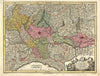

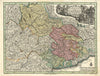

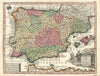

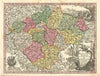

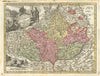

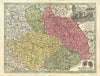

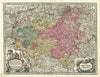

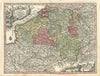

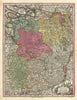

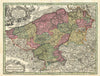

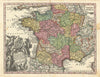

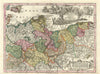

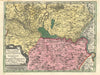

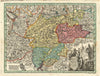

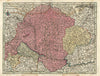
Matthäus Seutter (1678–1757) was a leading German cartographer, engraver, and publisher of the early 18th century, based in Augsburg. Originally apprenticed as a brewer, he abandoned that trade to study mapmaking under Johann Baptist Homann in Nuremberg, one of Europe’s foremost cartographers of the period. After returning to Augsburg, Seutter worked for the publisher Jeremias Wolff before establishing his own mapmaking business around 1707. His firm quickly became one of the most productive in Germany, rivaling Homann’s, and issued an impressive range of atlases, wall maps, and globes. Seutter’s maps are notable for their grand baroque style, elaborate allegorical cartouches, and rich hand colouring, often adapted from earlier works by Homann, De l’Isle, and others. In recognition of his achievements, Emperor Charles VI appointed him Imperial Geographer around 1732, granting him special publishing privileges. His major atlases, including the Atlas Novus and Atlas Minor, were widely distributed across Europe and remained influential long after his death. Following his death in 1757, the business was inherited by his son Albrecht Carl Seutter and later passed to his son-in-law, Tobias Conrad Lotter, who continued the tradition of Augsburg map publishing into the latter half of the century, ensuring Seutter’s enduring legacy in European cartography.
EU orders up to €150 are sent VAT- and duty-paid — no additional taxes on arrival
Authenticity Guaranteed - We only sell original antique & vintage items
Can we help? Call us on +44-208-960-3476 • FAQs
All our products are exempt from US tariffs — no additional duties or taxes payable on arrival.


- Shop by Country
- Shop by Cartographer
- Shop Maps by Type
- Shop Prints by Subject